How
Generative Engines Are Transforming US
Search Behavior
Artificial intelligence is transforming how Americans search for information. According to the
Pew Research Center, 18% of Google searches now display an AI Overview and 58% of US
adults have encountered AI generated summaries. As systems like Google AI Overviews and
Perplexity shift users toward natural language search and direct, synthesized answers, zero
click behavior is rising quickly across the US market. To maintain visibility in AI-driven search,
brands need evidence-based insights into GEO, SEO performance metrics, and data on how
generative platforms like Perplexity actually work.
AI Overview Coverage
18% of Google searches display AI Overviews
Intent Bias
88% of AI Overview triggers occur on informational queries
CTR Impact
Position 1 clickthrough rate drops 34.5% when AI Overviews appear
AI search uses generative artificial intelligence to interpret user intent, analyze context, and
produce direct answers at the top of search results. Instead of relying only on keyword
matching, systems like Google AI Overviews and Perplexity generate synthesized summaries
from multiple sources, reducing the need for users to click through to websites.
This shift changes traditional search behavior. Google states that AI Overviews increase task
completion confidence and user satisfaction. Perplexity shows how real time search combined
with generative analysis supports natural language search, making generative summaries a
defining part of the US search experience.
Why AI Search Matters
● Users rely on direct answers instead of scanning link lists
● Natural language search is now the dominant query style
● Zero click behavior increases significantly when summaries appear
● AI Overviews appear mostly on informational queries
● SEO alone cannot maintain visibility inside generative answer systems
● GEO vs SEO is essential for full search coverage
● Understanding what is generative engine optimization improves summary inclusion
● How Perplexity AI works reveals emerging patterns in search behavior
What Brands Must Do
Brands must combine SEO and generative engine optimization to stay visible. This includes
structuring content for natural language search, improving factual clarity, preparing information
for AI extraction, and using AI SEO Services that enhance both ranking and generative visibility.
The State of AI Search Today
AI search has become one of the fastest-growing segments in the digital ecosystem, driven by
the adoption of generative engines, natural language search, and AI-powered assistants. Over
the past year, AI search has scaled significantly, influencing traditional search models across
both consumer and enterprise environments. Stanford HAI reports that 78% of U.S.
organizations increased or maintained their AI investments during the past year, showing strong
momentum behind AI driven search and GEO vs SEO adoption..
As AI reshapes how people search, market growth and adoption trends reveal how deeply
generative technologies are influencing the search ecosystem.
Market Size and Growth Trajectory
Global AI Search Engines Market
Projected to reach USD 43.63 billion in 2025 and USD 108.88 billion by 2032
Generative Search Adoption (Behavioral)
Nearly 30% of U.S. adults report using AI chatbots to look for information online, indicating that
generative answers are becoming part of routine search behavior
Global Artificial Intelligence Market (Overall AI Market)
Estimated at USD 371.71 billion in 2025, projected to reach USD 2,407.02 billion by 2032
North America Share of AI Search Engines Market
Expected to represent approximately 41.4% of global AI search revenue in 2025
Google's Continued Dominance
Despite rapid growth in generative AI tools and answer engines, Google remains the primary
gateway for online information discovery. Its unmatched scale, deeply embedded user habits,
and aggressive rollout of AI Overviews ensure its ongoing leadership in both traditional search
and generative search experiences.
According to Semrush, Independent SERP monitoring also shows that AI Overviews appeared
in 13.14% of U.S. desktop searches in early 2025, validating how deeply Google has already
embedded generative answers within its results pages
Meanwhile, AI-first competitors continue to gain traction. Reuters reports that Perplexity’s U.S.
traffic grew more than 500% year over year, yet their scale remains a fraction of Google’s reach.
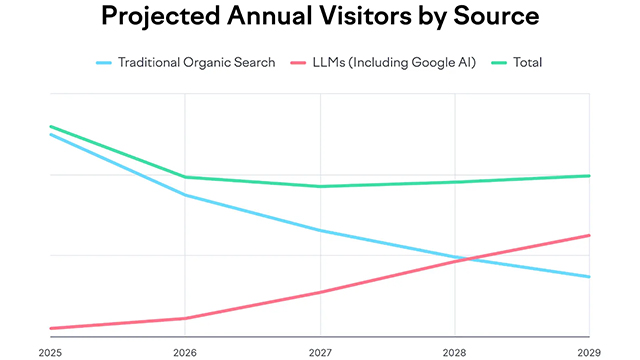
These patterns point toward a hybrid search future where classic SEO and generative engine
optimization work together to sustain visibility across traditional and AI-driven results.
The future of search is here. Your strategy shouldn't be stuck in the past.
AI-powered search is reshaping how people discover information, click on results, and interact
with the web. The following data points represent the most reliable, independently verified
statistics available from industry-leading research organizations and analytics firms.
AI Overviews & User Behavior
Adoption & visibility:
18% of Google searches now display an AI Overview, with 58% of US adults having
encountered AI-generated summaries in their results
AI Overview presence jumped from 6.49% (January 2025) to 13.14% (March 2025) on
US desktop searches, a 102% increase in just two months
Adoption & visibility:
88% of AI Overviews trigger on informational queries, targeting knowledge-seeking
searches
Users click links half as often when an AI summary appears: 8% click-through rate with
AI Overviews vs. 15% without
Position 1 organic CTR drops 34.5% when an AI Overview is present
78% of US organizations increased or maintained their AI investments over the past year,
demonstrating strong institutional momentum toward AI-driven search and automation.
Advertising, Traffic & Publisher Impact
AI-powered search advertising in the U.S. is projected to surge from just over $1 billion
in 2025 to nearly $26 billion by 2029—a 2,500% increase
Some publishers saw referral traffic drop more than 15% during early AI search
summary rollouts
Generative Engines & Answer Tools
Perplexity's monthly visits grew from 52.4 million (March 2024) to 159.7 million (March 2025)—a
205% year-over-year increase. Its Deep Research mode autonomously performs dozens of
searches, reads hundreds of sources, and synthesizes comprehensive reports.
Search Engine Landscape
Google maintains ~90% of global search engine market share, forming the foundation on which
AI-powered search transformations are occurring.
AI Overviews influence how much organic traffic a page can generate, especially for
informational queries. This simple calculator estimates the potential impact on monthly clicks,
conversions, and revenue based on your own traffic and assumptions. It is designed to help
teams understand how GEO vs SEO decisions affect performance in an AI driven search
environment.
AI Overview Impact Calculator
Your Results:
GEO vs SEO Explained
GEO vs SEO represents the two essential strategies for visibility in a world where search is
rapidly shifting toward generative answers. While SEO focuses on ranking in traditional search
results, generative engine optimization focuses on being extracted, summarized, and cited by AI
systems.
How SEO Works
Creates pages that rank in classic blue link results
Uses keywords, backlinks, and technical optimization
Focuses on visibility in organic lists
Supports long term brand authority
How GEO Works
Focuses on supplying AI with clear, easy to extract information
Aligns content with natural language search
Delivers concise, factual, and structured answers
Increases chances of inclusion in AI Overviews and Perplexity responses
Both are required to stay visible as AI powered search grows. Generative engine optimization
does not replace SEO. It expands SEO by preparing content for extraction, summarization, and
answer generation inside AI systems.
What Is Generative Engine Optimization
Generative engine optimization prepares content so generative systems can extract,
summarize, and cite it accurately. It supports visibility inside AI Overviews, Perplexity answers,
and other generative interfaces.
Core Elements of Generative Engine Optimization
● Answer first content that directly addresses user intent
● Natural language search alignment
● Sentence structures that AI can easily parse
● Precise definitions, lists, and factual statements
● Structured data when relevant
● High quality citations and credible sources
● Authority signals that improve extractability
GEO is already influencing inclusion in Google AI Overviews and answer engines. Brands that
adopt GEO early will be more competitive as generative search becomes the default
experience.
How Natural Language Search Is Changing User
Behavior
Natural language search is now the dominant way Americans interact with AI powered search
engines. Instead of typing short keyword phrases, users now ask full questions that include
context, intent, and desired outcomes. This shift is a direct result of how generative engines like
Google AI Overviews and Perplexity process information.
According to the Pew Research Center, 62% of U.S. adults now interact with AI at least several
times a week, and many use full sentence prompts when engaging with AI tools. This reflects a
clear shift toward conversational and natural language search, as users increasingly rely on
question based phrasing to receive direct, synthesized answers. As people grow more
comfortable with AI generated summaries, they are more likely to submit complete questions
instead of short keyword fragments.
Why Natural Language Search Matters
Generative models are designed to understand conversational input
Users rely on AI summaries for immediate answers
Queries now include context, intent, and specificity
AI Overviews trigger more often for question based searches
Perplexity ai how it works encourages full sentence queries
What This Means for Content
Brands must structure content in ways that reflect how users naturally ask questions.
This includes:
Using questions as headers
Writing clear, direct answers immediately below each header
Creating FAQ blocks
Supporting answers with data and concise explanations
Reducing jargon and keeping language natural
Natural language search is a core part of GEO vs SEO, because generative engines extract and
rewrite content based on natural language patterns.
Have questions or are you ready to start your project? We're here to help.
Reach out to our team today and let's discuss how we can work together.
Google AI Overviews provide AI generated summaries of search topics. They appear above
traditional results and influence how users engage with information.
Brands must understand generative engine optimization to increase the likelihood of being
included in summaries. SEO remains important, but GEO is what influences generative
extraction.
Impact of AI Overviews
Most AI Overviews appear on informational queries
CTR drops by up to 34.5% when they appear
Zero click behavior increases
Summaries influence user decisions before they scroll
Google reports higher user satisfaction for enhanced queries
How AI Overviews Select Content
Google uses multiple signals:
Relevance to query intent
Quality and accuracy of information
Structured, extractable content
Factual clarity
Strong authority indicators
Perplexity AI - How It Works
Perplexity operates as an answer engine, not a traditional search engine. It performs real time
web searches and synthesizes results into concise, citation backed answers.
Key Features of Perplexity
Real time crawling and sourcing
Multi source synthesis
Citation based responses
Natural language search interaction
Deep Research mode for complex subjects
Why Perplexity Matters to Brands
It rewards:
Clear factual information
Structured content
Concise explanations
Natural language alignment
Brands that understand how Perplexity selects and rewrites content can better prepare for the
next generation of answer engines.
Traffic and CTR Shifts
Organic CTR declines significantly when AI Overviews appear
Zero click searches rise because summaries answer queries directly
Informational content is most affected
Publishers report declines in traffic from Google (Reuters)
How Brands Should Respond
Restructure content for generative extraction
Build authority with credible sources
Focus on natural language search
Use AI SEO Services that integrate GEO
Traffic patterns will continue to change as AI powered search expands, so adopting GEO early
is critical.
Ranking and Visibility
Even if a page ranks well, AI summaries may appear above it and capture attention first. This is
why GEO vs SEO must be combined.
Impact of AI Search on Traffic, CTR, and Rankings
AI powered search has clear and measurable effects on organic performance.
What Brands Should Do Now
Brands must take a proactive approach to remain visible across AI powered search
experiences.
Immediate Actions
● Use answer first content structure
● Optimize for natural language search
● Apply generative engine optimization principles
● Strengthen factual accuracy and citations
● Add structured data when appropriate
● Update older content for clarity and extractability
● Understand perplexity ai how it works
● Combine GEO vs SEO for complete coverage
Brands that act now will be better positioned for 2025 and 2026 search ecosystems.
We prepare your content for natural language search at scale, improve how AI
systems extract and cite your information, and strengthen your visibility across traditional search
results and AI-driven summaries. Whether you need one landing page or hundreds, we build
optimized content that performs across all AI-powered platforms.
The result
Your brand becomes discoverable in AI-powered search experiences, from
Google's AI Overviews to conversational AI platforms, at whatever scale your business requires.
Our approach
We create landing pages at scale, each one optimized for natural language
queries and designed to be easily extracted by AI systems. This means consistent visibility
across your entire content library, not just a handful of pages.
Why it matters
More people are asking questions conversationally, through voice search,
ChatGPT, and AI assistants. If your content isn't optimized for how AI reads and understands
information, you're missing out on visibility where your customers are actually searching.
Frequently Asked Questions
How is AI changing search behavior in the United States?
AI is changing search by shifting users toward direct answers instead of requiring clicks to
external sites. Google AI Overviews and answer engines like ChatGPT encourage natural
language search, multi-step reasoning, and zero-click behavior. These changes influence
clickthrough rates, organic rankings, and the types of content formats that surface in generative
results.
What percentage of Google searches now include AI Overviews?
AI Overviews now appear in a significant and steadily increasing portion of Google searches. As
Google expands its generative search features across more query types, AI-generated
summaries are becoming a regular part of the search experience. Brands should plan for
continuing growth in AI Overview visibility.
How do AI Overviews affect organic clickthrough rate?
What is generative engine optimization?
Is SEO still relevant in 2026?
AI Overviews typically decrease organic clickthrough rates because users often engage with the
generated summary instead of scrolling to blue links. This makes it essential for brands to
optimize content so it can appear inside AI-generated answers through a balanced GEO vs
SEO approach.
Generative engine optimization is the practice of structuring content so generative systems can
understand, extract, and summarize it effectively. It focuses on answer-first writing, natural
language search alignment, factual clarity, authoritative sourcing, and formats that AI systems
can interpret reliably. GEO works alongside SEO, not as a replacement for it.
Yes. SEO remains essential for indexation, ranking, and sustained visibility in traditional search
results. However, SEO on its own is no longer enough. A combined GEO vs SEO strategy
ensures content can rank in classic SERPs while also being eligible for inclusion in AI
Overviews and generative answers.
Future Outlook for AI Search in 2026 and Beyond
AI search is set to expand significantly over the next year, driven by ongoing advancements in
generative models, deeper integration of AI Overviews, and the rising influence of answer
engines. As natural language search becomes the default behavior across both mobile and
desktop, users will continue to expect fast, synthesized, and highly accurate responses without
needing to click through multiple pages.
Key expectations for 2026 include:
Broader coverage of AI Overviews across more query types
Stronger reliance on generative engine optimization for brand discoverability
Emerging AI-powered advertising formats and new visibility surfaces
Steeper increases in zero-click behavior
Increased adoption of answer engines such as Perplexity
Growth in natural language search and conversational querying
These trends point toward a future where traditional SEO and generative visibility work side by side. Brands that embrace GEO vs SEO, understand what generative engine optimization requires, and align content with natural language search patterns will be best equipped to maintain visibility across both classic search results and AI-driven summaries.
Generative AI is reshaping how information is found, evaluated, and trusted. As AI Overviews and answer engines continue to expand, brands that prepare early will stand out. Investing in clear, authoritative, and AI-ready content today ensures visibility, accuracy, and long-term authority in a search ecosystem that will evolve rapidly through 2026 and beyond.